Nonlinear Elasticity

Our work covers
- Constitutive theory of nonlinear elastic materials, which is mostly applied in soft tissue biomechanics
- Coupling soft-tissue stress with instability patterns and elastic waves.
Initially stressed solids
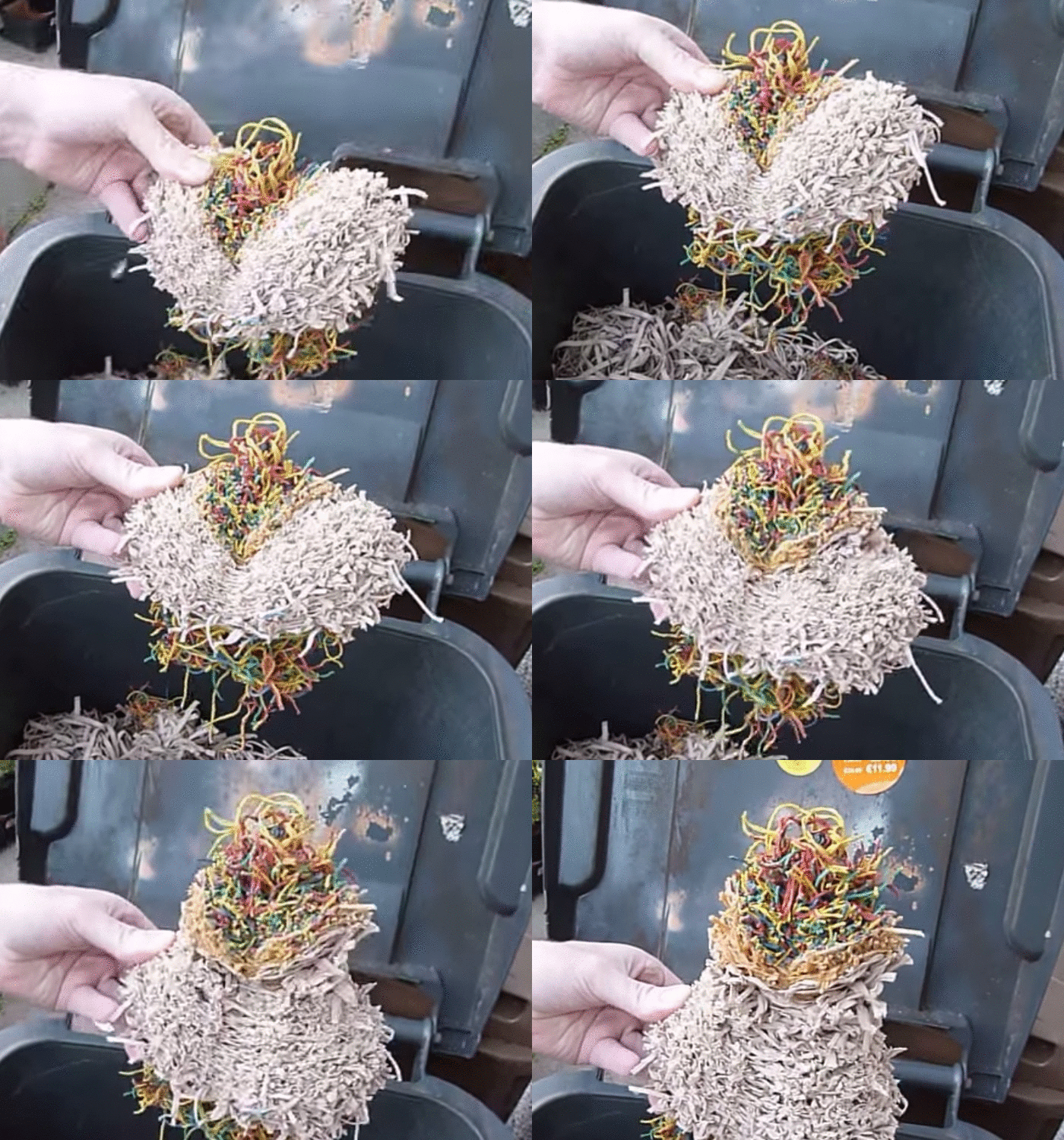
The driving question is how to mathematically describe the mechanical response of residually stressed solids? Our main contribution has been revealing a new symmetry, a result from conservation of energy, that restricts the possible mechanical responses. The image at the top of this page shows arrows which indicate the direction of the residual stress of a thick tube. The material is in equilibrium.
Instability patterns
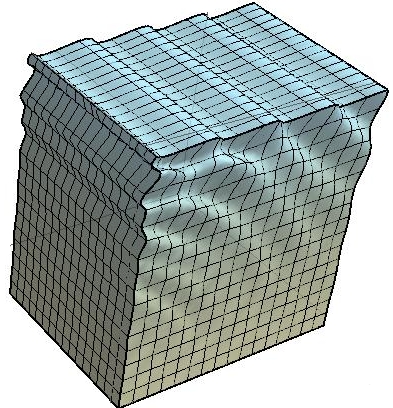
Most biological materials (and industrial) are reinforced with stiff fibres or are under tension. I figure out how these mechanisms influence elastic surface waves and the formation of surface wrinkles. The main reasons to do this are
- Will give us greater control over surface waves or forming textured surfaces (using surface wrinkles).
- Use these surface waves and surface wrinkles to measure biological materials.
Publications
The elastic stored energy of initially strained, or stressed, materials: restrictions and third-order expansions
A large variety of engineering and biological materials have a non-zero internal stress distribution, even in the absence of applied …
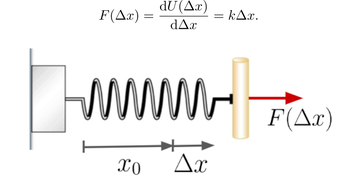
Universality of the angled shear wave identity in soft viscous solids
Mechanical stress in tissue is important but hard to measure. The angled shear wave identity (ASWI) estimates stress from shear-wave …

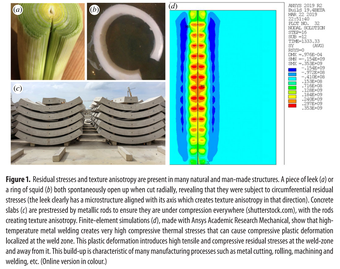
Representing the stress and strain energy of elastic solids with initial stress and transverse texture anisotropy
Real-world solids, such as rocks, soft tissues and engineering materials, are often under some form of stress. Most real materials are …
The constitutive relations of initially stressed incompressible Mooney-Rivlin materials
Initial stresses originate in soft materials by the occurrence of misfits in the undeformed microstructure. Since the reference …
A new restriction for initially stressed elastic solids
We introduce a fundamental restriction on the strain energy function and stress tensor for initially stressed elastic solids. The …
Oblique Wrinkles
We prove theoretically that when a soft solid is subjected to an extreme deformation, wrinkles can form on its surface at an angle that …
Morphology of residually stressed tubular tissues: Beyond the elastic multiplicative decomposition
Many interesting shapes appearing in the biological world are formed by the onset of mechanical instability. In this work we consider …
On residual stresses and homeostasis: an elastic theory of functional adaptation in living matter
Living matter can functionally adapt to external physical factors by developing internal tensions, easily revealed by cutting …
Initial stress symmetry and its applications in elasticity
An initial stress within a solid can arise to support external loads or from processes such as thermal expansion in inert matter or …
Connecting the material parameters of soft fibre-reinforced solids with the formation of surface wrinkles
There is a need for more complete models of fibre-reinforced solids that use two anisotropic invariants. However, these models present …
Counter-intuitive results in acousto-elasticity
We present examples of body wave and surface wave propagation in deformed solids where the slowest and the fastest waves do not travel …
Shear instability in skin tissue
We propose two toy-models to describe, predict and interpret the wrinkles appearing on the surface of skin when it is sheared. With the …